
Four things changed this week
Two accounts on the same chat network stop colliding
Connect two Slack workspaces or two Discord logins, and NAOMS used to treat them as one account wearing two names. A reply now leaves from whichever account the conversation actually arrived on — not whichever one connected first — and where the system genuinely cannot tell which identity you meant, it says which one it used, or refuses outright rather than guess. Your reply leaves from the account that received it covers the reply path; Being logged in is four things, not one covers what was actually broken underneath it — a live connection, a login folder, a sealed credential and a shutdown entry are four separate pieces of state, and until this week every one of them was keyed by network instead of by account, so a second login silently overwrote the first one's credentials and its Disconnect button.
A group can vouch that you're real without learning who you are
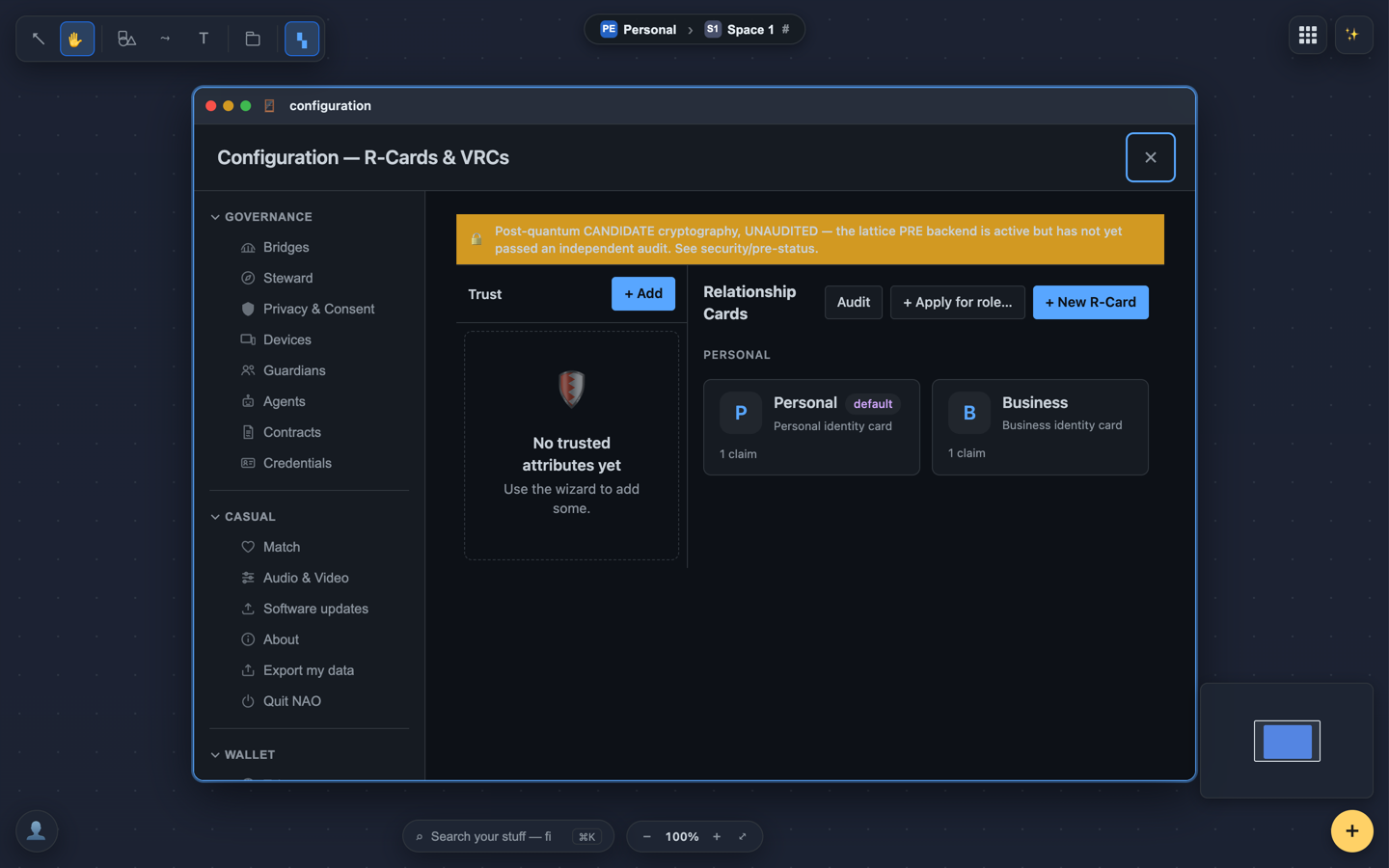
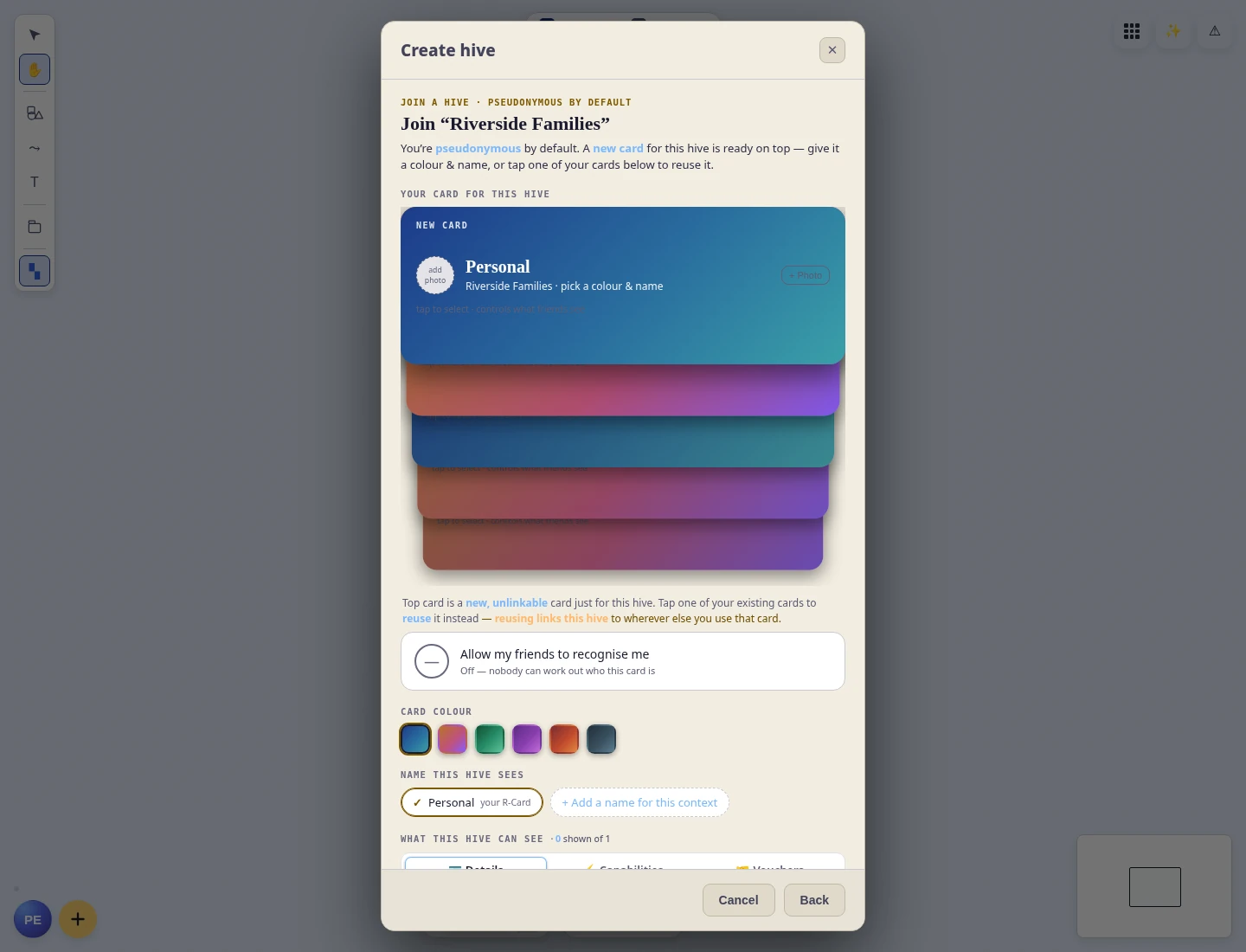
Joining a shared group used to mean showing your permanent identity to everyone already in it. A Group That Knows You're Real Without Learning Your Name describes a per-group persona — a display name you choose, or nothing but verified reputation — published instead of your root identity, so you decide what a given group learns about you one relationship at a time. The other half of that trade is Your Friends Get Their Names Back — On Your Screen Only: your own device quietly matches those name-less markers against people already in your address book, entirely on-device, so a group stays pseudonymous to strangers while still looking like your friends to you.
The assistant stopped drowning in tools it couldn't use well
Why the assistant sees 24 tools, not all of them draws a distinction: being granted a capability and being shown you have it are different things, and showing an assistant too many tools is its own failure mode. A hard-coded list of 29 tools — stale, and in the way — is deleted in favour of a ranked subset actually relevant to what you asked.
Bringing an AI into a group conversation now needs the room's consent
Let an AI Into the Group Chat Without Handing It the Room is about governance: in a group-owned conversation, the people already in it get to object before an assistant joins. What the group approves becomes a permission slip the assistant carries, checked before every single action it attempts — asking someone's calendar returns busy-or-free and nothing else — and the record of who let it in, who objected, and who removed it outlives the assistant itself.
What changed area by area
Most of this week's largest commit volumes are fleet-internal — CI, the merge queue, treasury-settlement bookkeeping, telemetry instrumentation — and are not written up here; this is not a developer blog, and none of them shipped a change a person outside the fleet would see. The counts below are real (each is a per-commit file union over the window, not a two-point diff), shown for proportion rather than as six more stories:
calling 217 · token 208 · scripts 179 · memories 168 · repo-pipelines 142 · browser client 141 · agents 128 · core/transport 113 · messaging-adapters 99 · core/chain 90 · ai-chat 87 · plan 76 · sdk 65 · chat 60 · hives 51 · vault 48 · plugins 45 · core/boot 37 · ci 36 · contacts 34.
Messaging-adapters (99) and hives (51) are the two areas that actually match this week's shipped stories above.
An honest note on what didn't ship
The single largest concentration of commits this week — dozens of numbered revision rounds (R32 through R55) against real, verbatim owner feedback — went into a presentation-layer canvas mock under roadmap item 1844. It touched 75 of the week's 157 total changed files. None of that work is application code, and by the end of this window it was still in its research phase, not built. It is real engineering effort and it is not reported as a shipped feature, because it is not one yet.