Vision
Why this matters and where it's going — for investors, new members, and the curious.
Where this is going: A world where people own their memory, identity, and relationships — and intelligence is something communities hold together.
A Saturday in the Connected Version of Owning Your Own Life
Instead of arguing that owning your own data doesn't make you a hermit, here is a small ordinary scene from the world where it's true — and you can see for yourself that the most sovereign person in the room is also the most connected.
AI Alignment's Missing Half
Almost all of AI alignment is aimed at one target: making the model behave. But a perfectly behaved model handed to the wrong authority is still dangerous — alignment is always alignment *to someone*. The half the field under-builds is the governance around the model, and that is the half we treat with the same rigor others reserve for training.
Four Minds, One Question, and Nobody Peeking at the First Card
Instead of arguing that collective intelligence beats one giant brain, here is an ordinary evening where four sovereign local minds land in the same place on their own — and you can see that the agreement only means something because nobody copied anybody.
The Afternoon Sofia Let Something Go and Could Prove It Was Gone
A small ordinary afternoon from the world where forgetting works — where a person can let go of something they shared and genuinely, verifiably watch it be gone, while the record stays honest that it once existed. A memory you can finally trust, because it can let go.
The Assistant That Had No One to Sell Her Out To
Instead of arguing that an AI working for you is structurally different from a platform working on you, here is a small ordinary evening with the kind that's yours — one that watches you the way someone who loves you watches you, because there's no one on the other end of the wire to report to.
The Evening Nothing Asked Anything of Her
Instead of arguing that the best technology is unnoticeable, here is an ordinary evening where the most helpful tool in the house never once asked for attention — and you can see that the disappearing is the whole point.
The Garden Co-op That Made It Past Year Three
Instead of arguing that tooling, trust, and finance are the three walls that kill intentional communities, here is a small ordinary scene from a co-op that made it past the walls — and you can see, in one evening, why it held.
The Morning Priya's Whole Life Was in One Place
A small ordinary morning from the world where a system holds you as a whole person — your work, your home, your friendships, your past, all one life that belongs to you — instead of slicing you into accounts that each remember a sliver and answer to a different company.
The Morning the Company in the Middle Wasn't There
Instead of arguing that the extractive platform was only ever one shape the internet could take, here is a small ordinary morning in the world where the middle is simply gone — and the only thing you notice is what you got back.
The Night Priya's Laptop Was Finally Working for Her
Instead of arguing that your devices could earn for you instead of extracting from you, here is a small ordinary evening in the world where they do — where a person's own machines and agents build a record of contribution that belongs to her, never money, never a coin, just a plain account of value created between trusted people.
The Night the Whole Valley Coordinated and No One Was in Charge
Instead of arguing that a flat network with no one in charge can still coordinate, here is an ordinary night in a valley where it does — and you can see for yourself that the thing nobody runs is the thing nobody can break.
The Plane Where Three Things Finally Fit in One Bag
Instead of arguing that local-first software, personal AI, and a hunger for sovereignty have converged into the moment worth building in, here is a small ordinary scene where all three are simply in the same room at once — and you can see why it had to be now.
The Repair That Settled Up Without a Contract
Instead of arguing that the best economic activity is between trusted beings, here is an ordinary week between neighbors — and you can see the warm low-friction cooperation of a good firm happening with no firm, no contract, and no platform owning the connection.
The Saturday Two Neighbors Settled Up With No Ledger in the Sky
A small ordinary Saturday from the world where there's no one giant ledger the whole planet fights over — just every person holding their own signed, checkable record, and where two of them deal, the two records agree at the edge that matters. Crypto's real gift kept; its central bargain declined.
The Storm Warning That Reached the Whole Street Before It Hit
A small ordinary afternoon from the world where a scattered community moves like one body — a warning, a need, a decision flowing automatically along trusted channels each person set and can revoke, so what one learns the whole group can act on, without any company in the middle draining it all.
The Workshop That Decided Together and Didn't Fall Apart
A small ordinary evening from the world where a group of people genuinely decides and acts together — no boss on top forcing it, no endless stalemate either. The hardest thing humans try to do, shown working: a we that doesn't cost anyone the I.
Three Kitchens, Three Different Right Answers
Instead of arguing that local data breeds a diversity of solutions, here is an ordinary afternoon across three kitchens — and you can see that the variety nobody flattened is the thing that lets one of them save the others.
What NAOMS Is For
The whole point in one breath: your memory, your name, and your relationships should be yours, on your own machines — and the intelligence that helps you should be something your community holds together, not something a company holds over you. Here's what that looks like on an ordinary evening.
Credit You Mint by Trusting Each Other
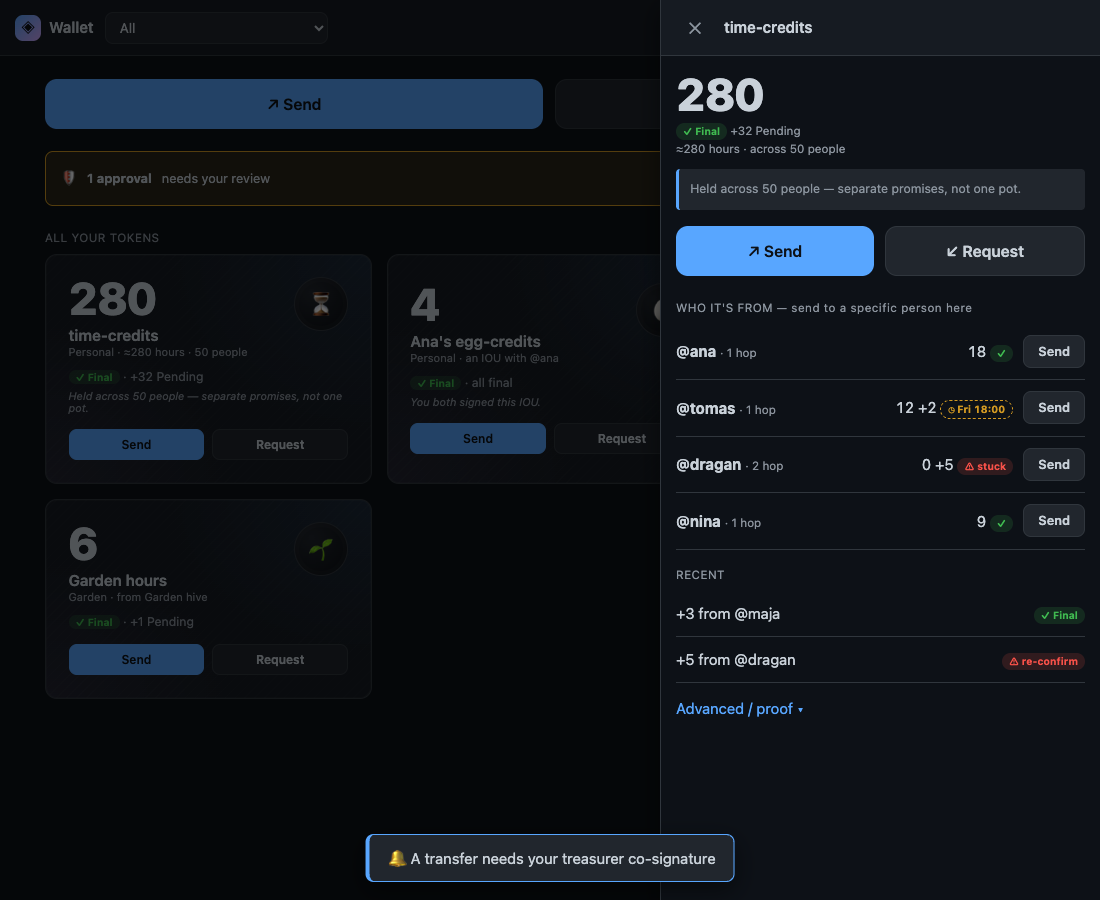
Imagine value created between you and the people you trust, instead of handed down by a bank and owed back with interest. This is the idea behind mutual credit — IOUs, not money — why it lives or dies, and our honest admission that almost none of it is built yet.
Not Money, Not a Security: What Our Tokens Actually Are
The tokens you hold here are deliberately not money and not a security — by design, not by accident. They're records of mutual obligation: IOUs between people who trust each other, contribution credits, community credit. This is the reasoned position behind that — what these tokens actually are, why their shape keeps them outside the investment frame, and the honest line where the regulated world begins. A design stance, not legal advice.
Forgetting Is a Feature: The Right to Be Forgotten by a Memory That Cannot Lie
You get a memory that can never quietly rewrite its own past — and that can still genuinely forget what you ask it to. Something you shared can be truly, verifiably gone, while the record stays honest that it once existed. This is the essay on how those two promises stop being a contradiction.
What Circles Taught Us About Trust You Can Take Back
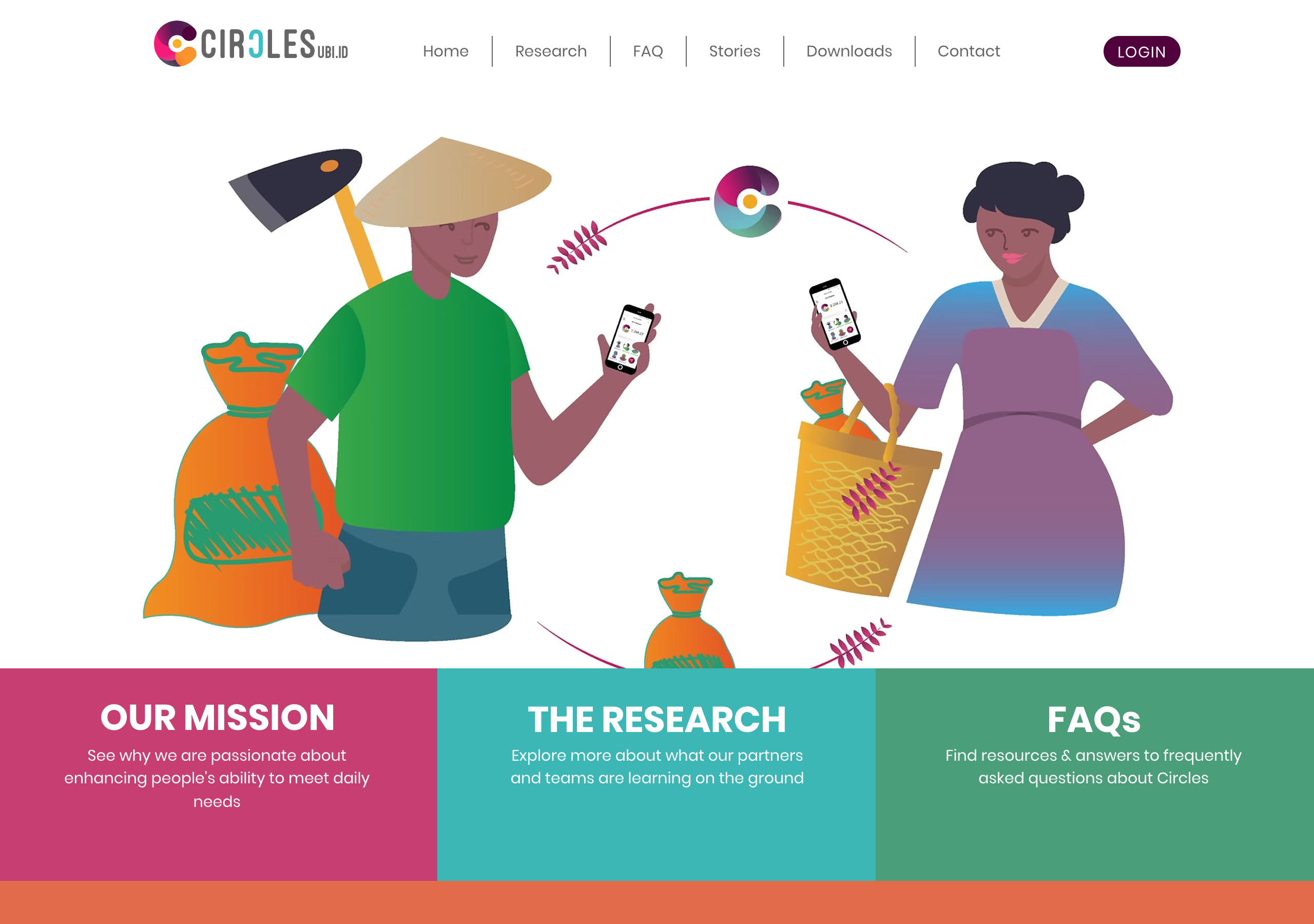
Because of Circles, you get a trust you can revoke in an instant — cut someone off and their claim on your community vanishes the moment you decide it should. This is the eight-year story, failed pilot and all, of what they showed us about trust, decay, and severance.
GNU Taler Showed Us You Can Have Privacy and Accountability at Once
GNU Taler keeps the buyer private and the merchant transparent — without a blockchain — and that asymmetric design clarified how we think about value moving between people inside NAOMS. Here's what we took, and where our axioms pulled us elsewhere.
What iroh, nostr, and atproto Taught Us About Shipping the Work
Three projects we study and admire — iroh, nostr, and atproto — shaped how NAOMS moves big files, keeps a signed event simple, and treats schemas as contracts. Here's what we took from each, honestly, and where our own axioms led us elsewhere.
The Hyperagent and the Vampire: Two Ways an Instrument Stops Serving You
An AI agent can fail you in two opposite ways: by accumulating until you can't function without it, or by quietly draining your attention and data and giving nothing back. You can't prevent either with a rule that says 'be good' — so we cage both with structure: a budget the agent can't extend, a scope it can't widen, a root key it can never reach, and a record it can't erase.
Honoring ATProto: An Account You Can Actually Carry
Every social network promises you can leave and take your stuff; almost none keep it. A tribute to the AT Protocol behind Bluesky, which made it real — you can move your whole account to a new host even if the old one would rather you didn't — and an honest account of what we took from it and where we went our own way.
The Sovereignty of the We
A group here is a being in its own right — its own memory, identity, and authority. The hard question this is about: how a group can be strong enough to genuinely act while every member stays genuinely free to object and to leave, so the We never swallows the I and the I never dissolves the We.
Fellow Travelers: Reticulum, a network that needs nothing
A generous look at Reticulum — an encrypted mesh that keeps working over radio, a serial modem, or a few bits per second, with no central authority and no way to even make an unencrypted link. Here's what its offline-first discipline taught us about keeping a community alive when the internet isn't.
You Don't Have to Take Our Word for It
Most systems ask you to trust that they're honest. We tried to make honesty something you can check yourself, with the artifact in front of you and no one vouching for it — so that if a record were tampered with, the math would show you, and a guess could never be dressed up as a fact.
When the Key Is the Whole Account
Most online identity is a story about servers: register, get a database row, and vanish if the company forgets you. Nostr told a different story — make a key and you exist. This is a tribute to that idea, what its minimalism taught us, and the honest places we diverged: rotation, encryption by default, and per-person chains.
Authority That Flows From You, Not Down From a Server
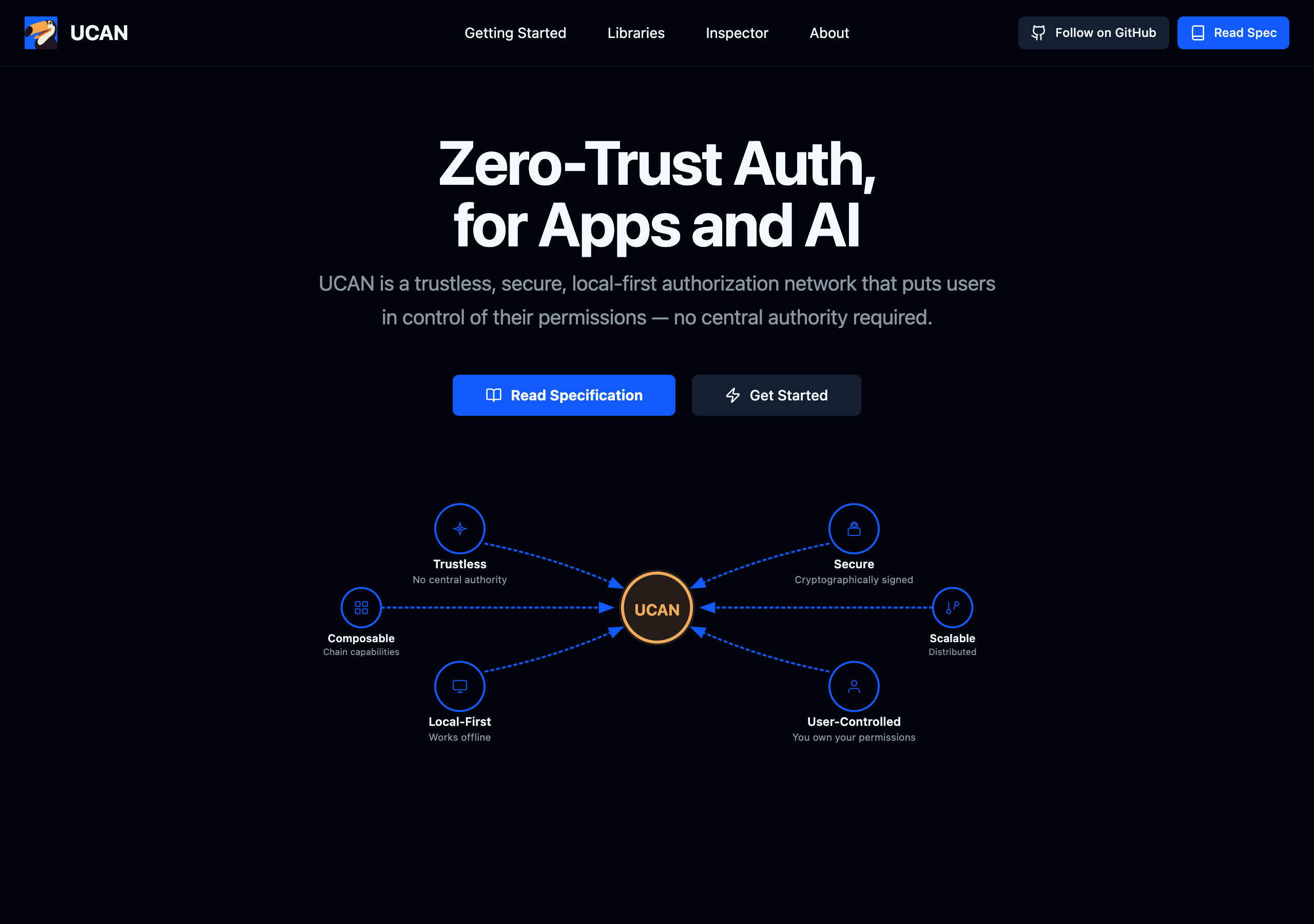
In almost every system you use, a server decides what you're allowed to do. Two projects — UCAN and Biscuit — flip that: permission becomes a signed token you hold and can hand out yourself. Here's what each does well, and why the choice between them for NAOMS was genuinely close — with Biscuit ahead on several rounds.
A River Is Whole and Still Has Banks
A system meant to hold the whole truth of you is one step from a system that exposes all of you. What keeps it from crossing that line is consent — built into the walls so no one can quietly move it. Here is why consent isn't a setting but part of what it means to treat you as a whole person, drawn from feminist bioethics and Indigenous data sovereignty.
Group Chats That Stay Private as They Grow
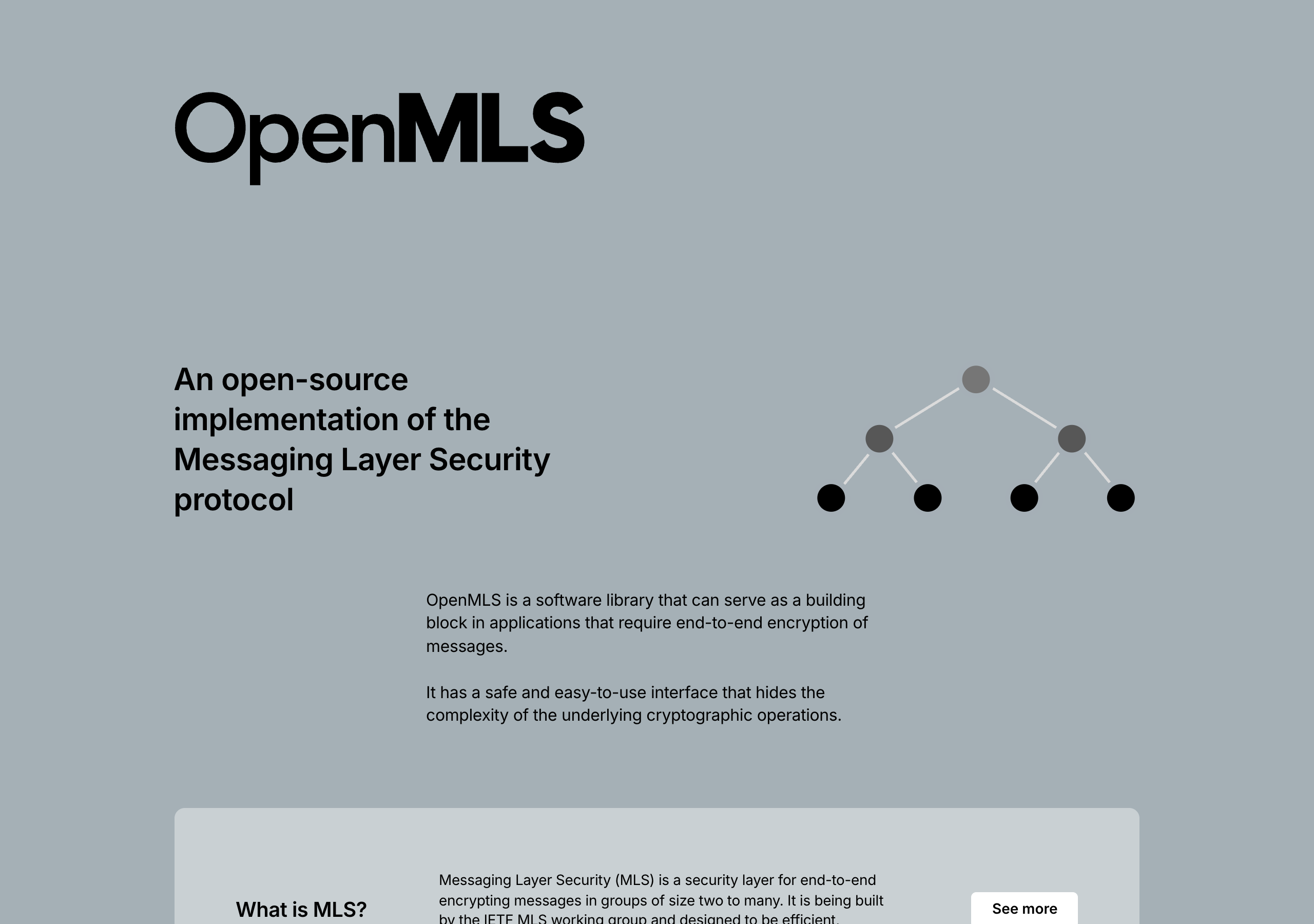
Keeping a two-person chat private is easy; keeping a group private as people join and leave is hard. Here we honor the open standard and the open-source code that solved it at scale and that our calls and groups depend on — and tell the honest story of why we chose to build on it rather than fork it.
The Data We Decided to Treat as Sacred
Most systems have a tier for sensitive data — passwords, health records, the things that would hurt if they leaked. We built that tier, and then we built one above it, for a kind of data that is not merely sensitive but sacred: the beliefs a person holds about themselves that are quietly false and quietly limiting. This is the essay about why a self-distorting belief — the most fragile, least flattering thing a person carries — gets the strongest protection in the whole system, and why that was a philosophical decision before it was a security one.
More Than an Account: Modeling a Self
An account is a row in a database: a name, a password, some preferences. We did not want to build accounts. We wanted to model selves — and a self is not a row. It is a structure of beliefs that carry weight, values that resist change, wounds that ask to be protected, and shadow beliefs the person holds that the evidence quietly contradicts. This is the essay about why a being in our system is not an account, and what it takes in structure to mean that honestly.
Why There Is No Global Ledger — and Why That's the Whole Point
Any system where everyone must agree on one shared truth has to decide whose vote counts — and that always hands power to a few gatekeepers. So we gave up the single shared record and made you the final authority on your own data. Here's the honest trade that buys, and where it doesn't fit.
Fellow Travelers: Scuttlebutt, and the feed that works offline
A friendly look at a project that's close kin to ours: Secure Scuttlebutt, a social feed that works with no server and no connection. Here's what it got right, where it struggled, and what we learned from both.
Barter Never Happened
The schoolbook story — barter first, then money to fix it — almost certainly never happened. Credit and who-owes-whom came first. Once you see that, a community's record of who helped whom isn't a market in disguise; it's a web of IOUs made legible without anyone forcing it.
Money Is Control Flow: Who Decides Who Can Participate
Money quietly decides which choices in your life are open and which are closed — and a handful of gatekeepers control that switch. Here's why we're building tools for tracking who owes whom that no one can shut off from the outside.
Honoring Automerge & Yjs: The Pioneers of Conflict-Free Merge
Two people typing into the same document on bad wifi, and the words just settle into one clean text — these are the libraries that made that ordinary. Here's our tribute, what we took from them, and why their honesty about where the magic stops saved us from a real mistake.
Honoring Loro: The Tree That Moves Without Breaking
When two people rearrange the same shared structure at the same time, their edits can merge cleanly instead of colliding. Here's our tribute to Loro, the library that nailed that hard problem, what we took from it, and where our need for encryption and identity led us to build alongside it.
The Issuer Who Could Restore You Could Impersonate You
Any company that can recover your account for you can also be tricked into giving it to someone else — that's the same power. We chose real ownership instead: nobody above you can restore you, so we let people you trust catch you instead of a landlord holding your keys.
An Identity Whose Whole History You Can Check — Even If You Don't Trust Its Host
Your identity stays provable even when the server hosting it can't be trusted. Here's our tribute to did:webvh — the method that pulls this off — what we borrowed from it, and the one always-online assumption our offline-first world had to redesign around.
Fellow Travelers: AD4M / Coasys, and a Web Built Around You, Not the App
Meet a kindred project that, like us, asks what the web would look like if you were the center of it instead of the app. Here's what we admired in AD4M and Coasys, what we borrowed, and where our own values pulled us a different way.
Honoring Deno: The Runtime That Says No by Default
Most programs can read your files and secrets the moment they launch. We build on Deno, which flips that: code gets nothing until it asks. Here's the tribute to the runtime that lets our software refuse by default — and where we pushed protection even further.
Trust Starts at Zero: The Slow Honesty of Earning a Relationship
Nobody is trusted here just for showing up. You start at zero and build standing through real, two-sided relationships you actually signed — and that trust never quietly leaks into a community you never joined. The friction you feel is honesty about how trust really works.
The Temperature Is Not the Patient: Why We Refused to Store a Trust Score
Your past mistakes won't be frozen into a permanent score that follows you around. We store no trust number anywhere — the system works out an answer fresh each time it matters, then lets it go, so you're free to be someone different tomorrow.
KERI and the Identity That Is Its Own History
Meet one of the ideas NAOMS stands on: KERI, which makes your identity nothing more, and nothing less, than its own signed history of key events. We honor the trick that defangs a stolen key, share what we borrowed, and say honestly where our offline-first world made us lean on its ideas without taking all the machinery.
Person, Not User: Why an Agent Is a Being and a Bot Is a Category Error
In NAOMS you're not a 'user' standing below a platform — you're a being with sovereignty, and so is every collective and every AI running its own instance. This essay makes the case for that choice, and faces its hardest catch: personhood for an agent only works if it also comes with limits.
A System That Lies to Itself Cannot Be Whole
Here's why you can trust a system that runs entirely on your own machine: the moment it could quietly rewrite its own past, 'complete in itself' would become a lie. This essay walks through why honesty and wholeness are really one promise — and why we won't let you (or us) keep one without the other.