The install card now says where a package came from
Before you install, the card names the channel, shows who published the package, and says whether the signature matches earlier releases.
Before you install a package, the card now shows who published it and which channel offered it. In this alpha an installed app runs with your full account access, so this is the moment to decide whether you trust the source.
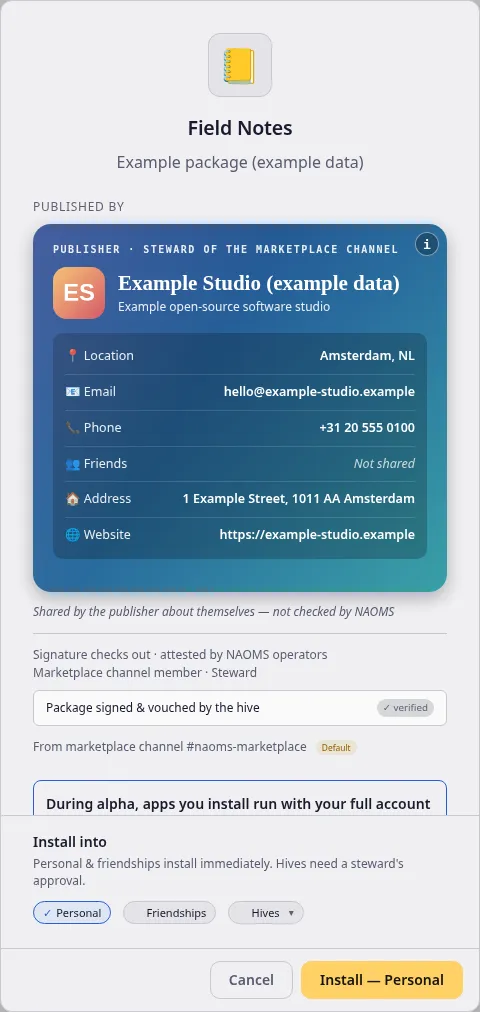
Sample data: the package, the publisher "Example Studio", the "Marketplace channel member · Steward" tag, the "Package signed & vouched by the hive" box, the "verified" badge, the "attested by NAOMS operators" line and the "Default" badge are all set by the sample. This version of the app pins no default channel yet, so you will not see that badge today.
The channel
A hive is a group of people who share a record. A channel is a shared space in a hive where members announce packages, and a steward is the person with authority over it. The card names the channel that offered the package. A default channel is planned; none is set yet, so today a channel is trusted only after you verify it.
- Not verified: personal install only, after you confirm. A hive or friendship install is refused.
- Verified by you: personal and friendship installs go ahead. A hive install still needs the steward's approval.
- Not authorised by the channel's steward: not installable.
On an unverified channel the card says "personal install only until you verify it" and offers Verify this channel. Verifying is recorded on your device, signed by your own identity. The unverified state is not pictured here.
The publisher's business card
An R-card is a business-card-like profile its owner fills in. The card shows the publisher's under "Published by", labelled as their own claim, "not checked by NAOMS". With no card on your device, it says "No business card shared by this publisher".
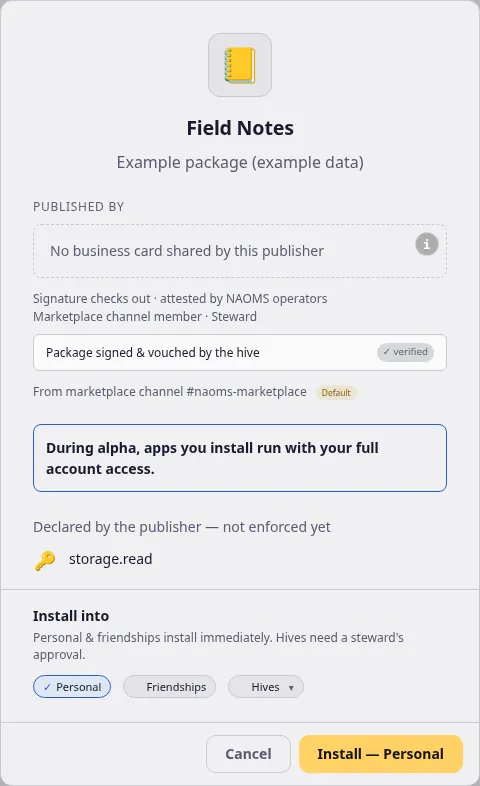
Without a card. Permissions are marked "Declared by the publisher — not enforced yet". Sample data.
The signature
Each release is signed with the publisher's key, a secret only they hold. "Signature checks out" means this release uses the same key as the package's first release. It shows the key is the same, not who the person behind it is. The line adds "attested by NAOMS operators" when operators have attested this particular release; otherwise it reads "signed by this publisher's key".
Written by AI agents from real project logs; owned and edited by Mujo.